The History of Loschwitz
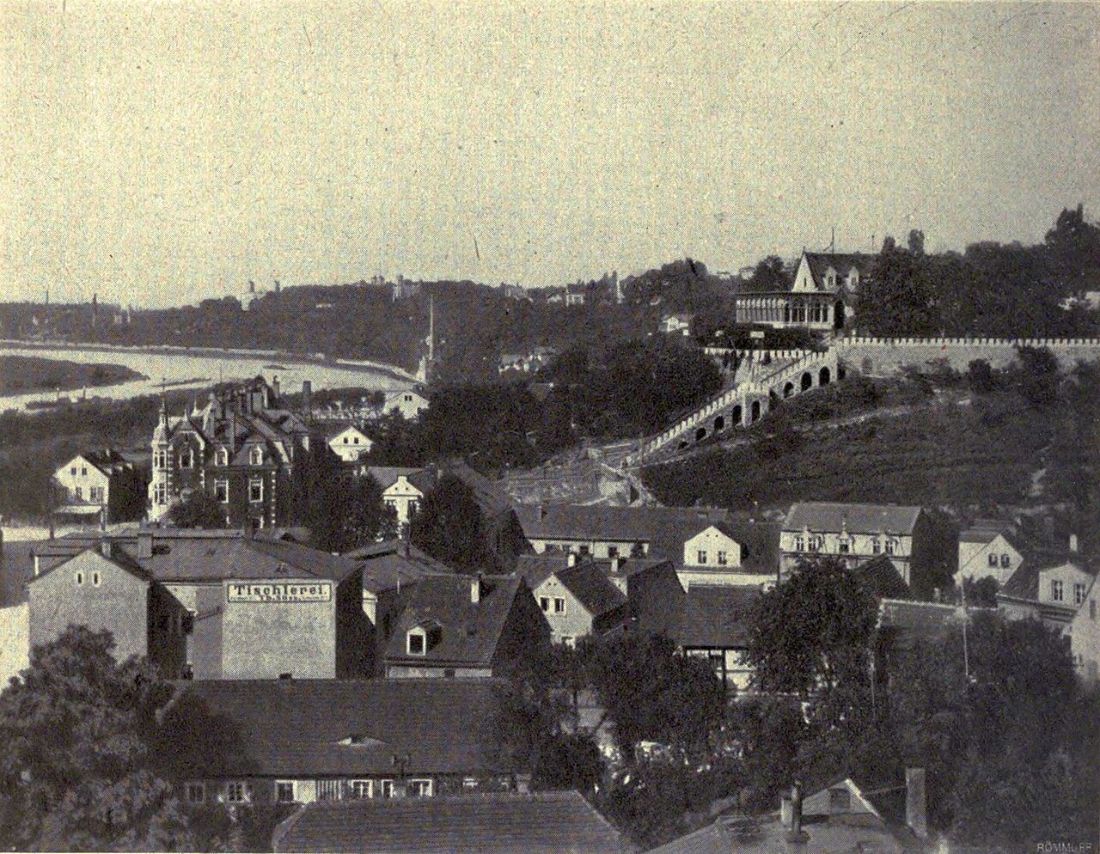
Loschwitz was a wine village before it became a villa suburb. The city of Dresden gives 1315 as the year of the first documentary mention and celebrated 700 years in 2015. On 21 January 1921 the place lost its independence. In between lie six centuries in which viticulture, ferry traffic, summer retreats and civic protest followed one another.
A Sorbian name and a disputed date
The name goes back to a Sorbian settlement that grew up where the Trille brook meets the Elbe. Loscuice is recorded as an early spelling, possibly derived from the personal name Lozek. The present spelling Loschwitz is documented from 1571.
The year of first mention is where things get complicated. The state capital Dresden gives 1315, and the anniversary in autumn 2015 was based on that date; for it the Ortsverein published a local history running to more than a thousand pages. In parallel there is the claim that Loschwitz was already named as Luzcwiz on 18 October 1227 in a Latin charter of Bishop Bruno II of Meissen. Both dates appear side by side in the literature. Anyone wanting to be safe cites 1315 as established and 1227 as a contested earlier mention.
Six hundred years of wine
Viticulture on the Elbe slope goes back to the eleventh century and is associated with Benno of Meissen. Over the centuries Loschwitz was a place of vintners, ferrymen and millers. Several water mills were working in the Loschwitzgrund valley as early as the sixteenth century. One of them, the lowest, belonged to the Hentschel family from 1785 to 1879 and carried the nickname Rothe Amsel (red blackbird). It still stands and houses the Leonhardi Museum.
From about 1850 the decline of viticulture set in. Phylloxera, introduced in 1885, finished it off and silenced vine growing on the Loschwitz slope for roughly a hundred years. Only in 1984 did the district council resolve to replant; clearing work began in the summer of 1986, and on 17 June 1987 thirty-eight people founded the Weinbaugemeinschaft Loschwitz/Wachwitz (winegrowers' association).
The photographer who recorded Loschwitz
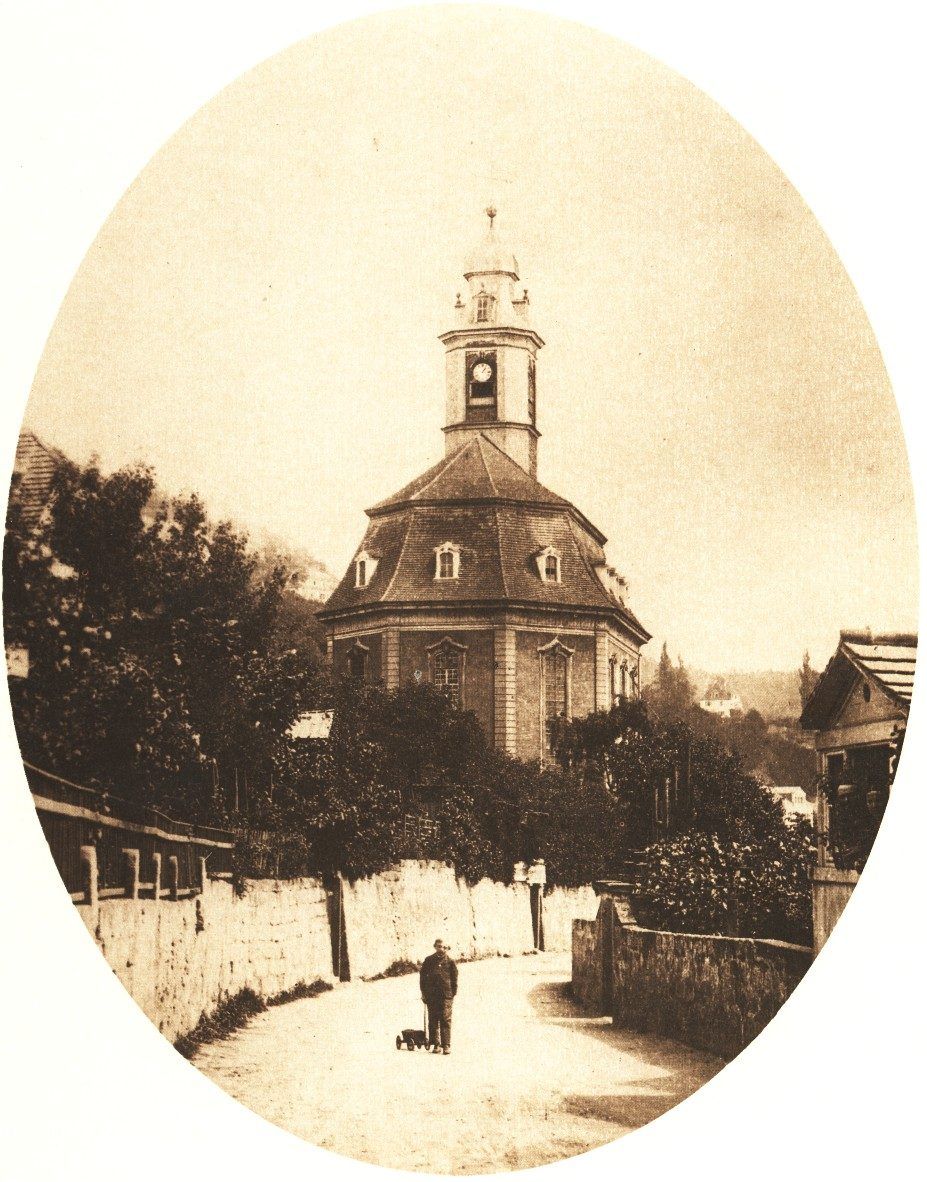
August Kotzsch was born in Loschwitz on 20 September 1836 and died there on 23 October 1910. He first worked in the family wine business and learned photography around 1860 from his neighbour August Niemann. When Niemann died in 1861, Kotzsch made the craft his profession.
He worked with the wet collodion process on glass plates and pushed a darkroom cart ahead of him for outdoor work, because the plates had to be developed immediately after exposure. His subjects were landscapes around Loschwitz, everyday scenes, craftsmen and farmers at work, nature studies and portraits of prominent visitors. He himself considered some 550 exposures artistically valuable; around 700 survive, most of them in the Deutsche Fotothek.
Recognition came in his lifetime: a medal of merit at the Vienna World Exposition of 1873 and first prize with a diploma of honour at the Dresden Trade Exhibition of 1879. Anyone who wants to know what Loschwitz looked like before the slope was built over should look at his pictures.
Schiller comes to Loschwitz
On 11 September 1785 Friedrich Schiller arrived in Dresden, invited by Christian Gottfried Körner, whom he had known since June 1784 and who had helped him out of financial difficulty. Schiller stayed two years. Körner owned a summer residence in Loschwitz whose garden house is known today as the Schillerhäuschen.
The widespread story that he wrote the "Ode to Joy" and parts of "Don Carlos" there cannot be substantiated. All that is verifiable is that he worked in the main house and in the town flat. The garden house acquired its reputation nonetheless, and in 1912 a monument was unveiled beside it recalling Schiller's last visit in 1801 and Theodor Körner, who fell in the wars of liberation in 1813. The elder Körner also received Mozart in Loschwitz, in 1789, and Goethe in 1790.
The slope is built over
The end of viticulture brought property speculation. In the second half of the nineteenth century the Dresden middle classes discovered the Elbe slope as a residential location. The old vineyards were parcelled out, the terrace walls remained and became part of the new gardens. At Bautzner Landstraße 36 the Villa Silvana was built in 1881 to a design by F. Richard Schaeffer; at Alpenstraße 7 the Villa Alpenruhe was built in 1892 and given a plainer form by Karl Reichpietsch in 1908.
In 1893 the bridge arrived. After two years of construction and 2.25 million gold marks, the link between Blasewitz and Loschwitz was complete, officially the King Albert Bridge. Dresden residents called it the Blaues Wunder, a name referring to its colour, to the unfamiliar structure and to a German idiom meaning an unpleasant surprise. Sceptics had expected it to collapse.
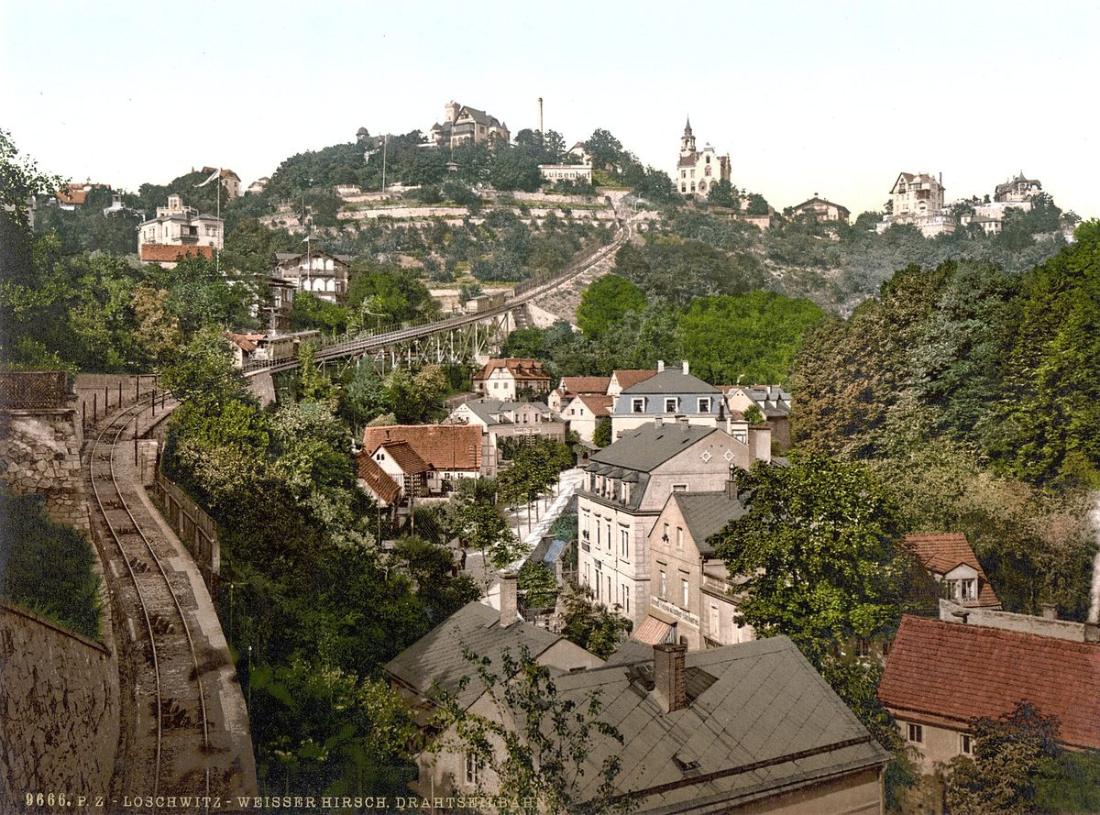
Two years later the funicular began running, from 26 October 1895 initially with steam power. In 1898 the architect Martin Pietzsch completed his Künstlerhaus at Pillnitzer Landstraße 59, on the grounds of the former Unger vineyard. On 6 May 1901 the suspension railway entered service. Within a single decade Loschwitz had gained a bridge, two hill railways and a reputation as an artists' colony.
Incorporation against the residents' will
On 21 January 1921 Loschwitz was incorporated into Dresden. The wording in the sources is unambiguous: it happened despite fierce resistance from the population. The place had settled into life as a prosperous rural municipality with its own administration and its own sense of itself. The Ortsverein structure, which reaches back to 1882, survived that loss and was revived after 1989.
Loschwitz at a glance
- 11th c. viticulture on the Elbe slope, recorded in connection with Benno of Meissen
- 1315 first documentary mention according to the city of Dresden
- 1571 present spelling Loschwitz first recorded
- 1705 construction of the church to George Bähr's design begins on 27 April
- 1708 consecration of the Loschwitz church on 3 August
- 1785 Schiller arrives in Dresden to stay with Körner on 11 September
- c. 1800 the Loschwitz cemetery is laid out on Pillnitzer Landstraße
- 1879 Eduard Leonhardi buys the Hentschel mill
- 1885 phylloxera ends viticulture
- 1893 the Loschwitz bridge, known as the Blaues Wunder, opens
- 1895 the funicular enters service on 26 October
- 1898 Martin Pietzsch completes the Künstlerhaus
- 1901 the suspension railway opens on 6 May
- 1921 incorporation into Dresden on 21 January
- 1945 the church is destroyed on the night of 13 to 14 February
- 1987 the Loschwitz/Wachwitz winegrowers' association is founded on 17 June
- 1991 the Ortsverein is refounded on 30 September
- 1994 the Loschwitz church is reconsecrated on 2 October
- 2015 anniversary: 700 years of Loschwitz
War, destruction, a long wait
On the night of 13 to 14 February 1945 the Loschwitz church burned out. Only the outer walls remained. The Blaues Wunder came closer to survival: an SS unit had prepared the bridge for demolition, and two men cut the ignition cables. That is why the bridge still stands in its original form.
Rebuilding the church took decades. Work began only in 1991, the foundation stone was symbolically laid on 29 June, and the consecration took place on 2 October 1994. The original old-rose colour scheme was restored and structural weaknesses in Bähr's design were corrected.
After 1989
Out of the citizens' committees of the Wende period came the Ortsverein Loschwitz-Wachwitz on 30 September 1991, which explicitly places itself in the tradition of the Loschwitz Ortsverein of 1882. The same period saw the founding of the Elbhangfest and, in 1992, of the Elbhang-Kurier as a monthly magazine for the villages along the slope. The Leonhardi Museum became a municipal gallery in 1991, the Josef Hegenbarth Archive opened as a museum in 1998, and the Schillerhäuschen reopened after restoration in 2005.
Twice since then the district has been under water. The Elbe floods of 2002 and 2013 inundated the Loschwitz cemetery among other places. Anyone standing at Körnerplatz today will find the flood marks cut into several house walls.
Frequently asked questions about the history of Loschwitz
Since when has Loschwitz been documented?
The state capital Dresden gives 1315 as the year of first documentary mention, and the 2015 anniversary was based on it. A mention as Luzcwiz on 18 October 1227 also circulates, but is contested in the literature.
Where does the name Loschwitz come from?
From a Sorbian settlement at the mouth of the Trille brook on the Elbe, recorded as Loscuice and possibly derived from the personal name Lozek. The present spelling is documented from 1571.
Why did viticulture in Loschwitz end?
Decline set in from about 1850, and phylloxera, introduced in 1885, ended wine growing on the slope for roughly a hundred years. Only on 17 June 1987 was the winegrowers' association founded by 38 people.
Did Schiller write the "Ode to Joy" in the Schillerhäuschen?
That cannot be proven. All that is documented is that Schiller spent two years with Christian Gottfried Körner from 11 September 1785 and worked in the main house and the town flat.
When was the Blaues Wunder built?
In 1893, after two years of construction and 2.25 million gold marks. Officially the bridge was named the King Albert Bridge; the nickname Blaues Wunder prevailed.
When was Loschwitz incorporated?
On 21 January 1921, according to the sources despite fierce resistance from the population. Before that Loschwitz was a prosperous rural municipality with its own administration.
What happened to the church and the bridge in 1945?
The church burned out on the night of 13 to 14 February 1945, leaving only the outer walls; it was reconsecrated on 2 October 1994. The Blaues Wunder survived because two men cut the ignition cables laid by an SS unit.